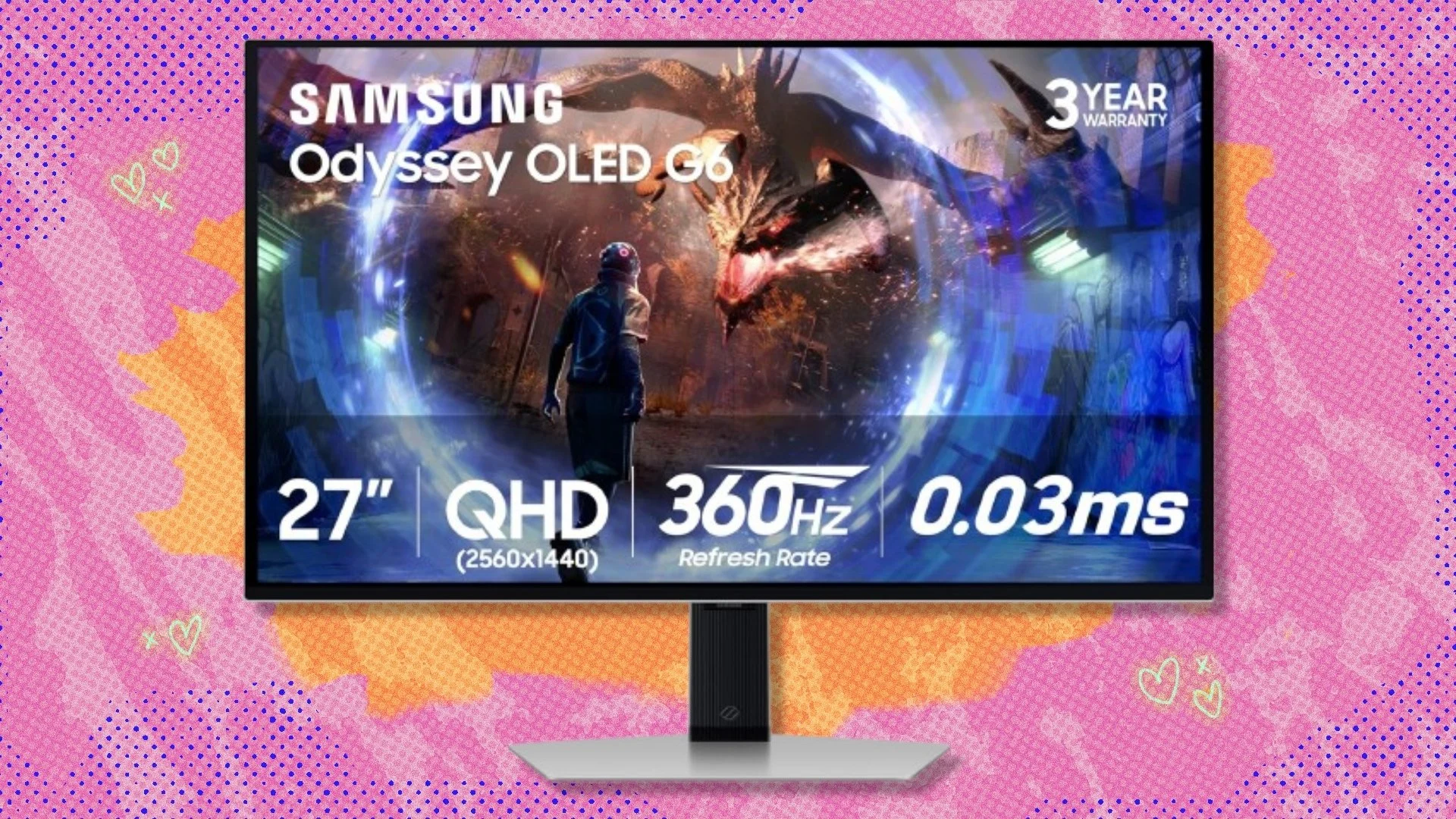
Samsung's 27-inch Odyssey OLED G6 gaming monitor has dropped to $687.06 on Amazon, marking a $213 discount from its $900 list price. The deal brings a QD-OLED panel with a 360Hz refresh rate and 0.03ms response time below the $700 threshold—a price point that's been difficult to reach for OLED gaming displays with these specifications.
Why QD-OLED Technology Matters for Gaming
The G6 uses Quantum Dot OLED technology, which represents a meaningful step beyond traditional OLED panels. Standard OLED displays emit light through organic compounds, but QD-OLED adds a quantum dot layer that converts blue OLED light into precise red and green wavelengths. The result is improved color volume and brightness without sacrificing the deep blacks that make OLED attractive for gaming.
For practical gaming scenarios, this translates to better visibility in dark scenes—think exploring caves in open-world games or spotting enemies in shadowy corners during competitive matches. The wider color gamut also means HDR content displays more accurately, particularly in games that support advanced color spaces like DCI-P3.
The 1440p Sweet Spot
Samsung positioned this monitor at 2560x1440 resolution rather than 4K, which is a deliberate choice that benefits most gaming setups. At 27 inches, QHD resolution delivers 109 pixels per inch—sharp enough that individual pixels aren't visible during normal use, but not so demanding that you need a flagship GPU to maintain high frame rates.
The 360Hz refresh rate becomes genuinely usable at this resolution. Even mid-range graphics cards like the RTX 4070 or RX 7800 XT can push competitive titles past 300 fps at 1440p with optimized settings. At 4K, you'd struggle to exceed 144Hz in most modern games without dropping to a high-end card. This makes the G6 particularly relevant for players who prioritize smoothness over absolute resolution.
Addressing the Burn-In Question
OLED burn-in remains the primary concern for anyone considering these panels for desktop use. Unlike TVs that display varied content, monitors often show static elements—taskbars, health bars, minimaps—for extended periods. Samsung's OLED Safeguard+ system attempts to mitigate this through several mechanisms: a dynamic cooling system that manages panel temperature, thermal modulation that adjusts brightness in static areas, and pixel shift technology that subtly moves the image to prevent uneven wear.
The three-year warranty provides some reassurance, though it's worth noting that burn-in coverage varies by manufacturer and often requires specific usage patterns to qualify. For context, LG's OLED monitors typically include a two-year warranty, while Alienware's QD-OLED displays come with three years of coverage that explicitly includes burn-in protection.
How This Price Compares
The sub-$700 price point is significant when measured against the broader OLED gaming monitor market. Alienware's 27-inch AW2725DF, which uses a similar QD-OLED panel and 360Hz refresh rate, typically sells for $800-$900. ASUS's ROG Swift OLED PG27AQDM, another 27-inch 1440p competitor, hovers around $850-$950 depending on sales.
The discount brings Samsung's offering closer to premium IPS territory—monitors like the ASUS TUF VG27AQL1A or LG 27GP850 sell for $400-$500 but use LCD technology with slower response times and inferior contrast. The $687 price essentially splits the difference, offering OLED benefits without the typical $900+ premium.
What You're Trading Off
The G6 lacks some features found on pricier OLED monitors. There's no USB-C connectivity with power delivery, which means you'll need separate cables for video and charging if you're connecting a laptop. The stand offers tilt and height adjustment but no pivot for portrait orientation—a limitation if you occasionally need vertical screen space for coding or content creation.
AMD FreeSync Premium Pro handles variable refresh rate duties, but there's no official G-SYNC certification. In practice, this rarely matters since NVIDIA cards support FreeSync over DisplayPort, but you won't get the G-SYNC Ultimate badge that some competing monitors carry.
Who Should Consider This Deal
This monitor makes the most sense for competitive gamers with mid-to-high-end PCs who've been waiting for OLED pricing to become reasonable. If you're running a system capable of 200+ fps in your primary games and you've been frustrated by IPS glow or VA smearing, the G6 addresses those issues directly.
It's less ideal for mixed-use scenarios where the monitor will display static productivity applications for eight hours daily. The OLED panel excels with varied content but remains vulnerable to image retention with prolonged static elements. Content creators who need precise color accuracy should also note that while QD-OLED offers wide color coverage, factory calibration varies, and professional color work typically requires manual calibration with a colorimeter.
Market Timing and Availability
OLED monitor pricing has been trending downward as panel production scales up and competition intensifies. Samsung, LG Display, and other manufacturers are increasing QD-OLED output, which should continue pushing prices lower throughout 2024. However, deals at this level—24% off a relatively new model—tend to be temporary, often tied to inventory clearing or promotional periods.
The timing coincides with the typical spring sales cycle, when retailers make room for summer inventory. Similar patterns emerged last year when OLED monitors saw their first significant discounts in March and April before prices stabilized through summer. If you're considering an OLED upgrade and this price fits your budget, waiting for a substantially better deal in the next few months is unlikely, though incremental improvements of $50-$100 could appear during major sale events.