Microsoft has acquired the team behind Cove, an AI-powered collaboration startup that raised $6 million from Sequoia Capital less than a year ago. The acquisition marks another chapter in the tech giant's aggressive push to embed AI capabilities across its productivity suite, though it leaves Cove's paying customers scrambling as the service shuts down April 1.
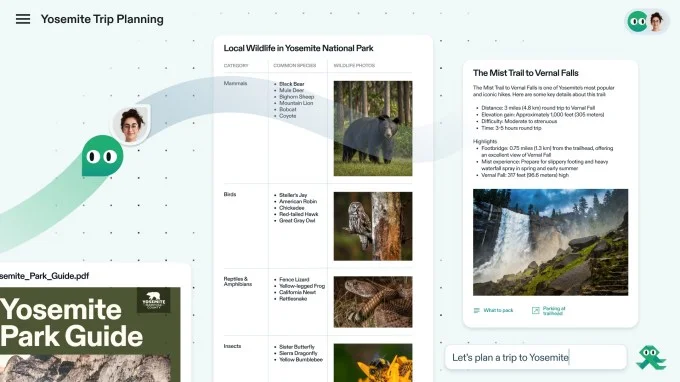
Founded in late 2023 by three former Google Maps engineers—Stephen Chau, Andy Szybalski, and Mike Chu—Cove attempted to solve what its founders saw as a fundamental limitation of AI chat interfaces: the inability to edit and manipulate AI outputs in a flexible workspace. Their solution was an infinite canvas where AI could generate editable blocks for tasks ranging from trip planning to research synthesis.
The Interface Problem AI Companies Are Racing to Solve
Cove's core thesis addressed a genuine friction point in how people interact with AI. Traditional chat interfaces force users into a linear, conversational flow that doesn't match how knowledge work actually happens. You ask a question, get an answer, and if you want to explore a different direction, you're stuck with a growing thread of text that becomes unwieldy.
The startup's canvas approach allowed users to branch conversations, reorganize AI-generated content, and build up complex projects visually. Users could pull in PDFs, images, and web content directly into the workspace, giving the AI richer context without switching between applications. The system would then generate cards, tables, and lists that users could edit, combine, or discard as their thinking evolved.
This wasn't just a UI preference—it reflected a deeper understanding that creative and analytical work rarely follows a straight line. The ability to see multiple AI outputs simultaneously, compare them, and synthesize them into something new represents a different paradigm from the question-and-answer model that dominates current AI tools.
Why Microsoft Moved Fast
The acquisition comes at a telling moment. Microsoft already integrated Copilot into its Whiteboard product in 2023, but bringing in a team that's spent the past year focused exclusively on AI-native collaboration suggests the company sees gaps in its current approach. The Cove founders' experience building Google Maps features like Street View—products that handle massive complexity while remaining intuitive—likely made them particularly attractive.
For Microsoft, this is a defensive move as much as an offensive one. The company faces competition from startups like Miro, which has a $17.5 billion valuation, and newer entrants like TLDraw and Kosmik that are reimagining visual collaboration from the ground up. More importantly, it's racing against Google, Anthropic, and OpenAI to define what post-chat AI interfaces will look like.
The speed of this acquisition—Cove only raised its seed round in 2024—indicates Microsoft identified specific capabilities or approaches worth absorbing quickly rather than building internally or waiting to see if Cove gained traction.
What Happens to Early-Stage AI Startups Now
Cove's trajectory raises uncomfortable questions for founders building in the AI application layer. The company had blue-chip backing from Sequoia, respected angel investors like Elad Gil, and a clear product vision. Yet barely a year after raising seed funding, the team concluded they could better pursue their mission inside a tech giant.
This pattern is becoming familiar. As foundation models improve rapidly, startups building applications on top face a brutal calculus: their core functionality can be replicated by well-resourced incumbents, and their differentiation often comes down to UI/UX choices that are relatively easy to copy. For investors, this means even promising early traction doesn't guarantee a path to building an independent company.
The refund of March subscriptions and data export process Cove is offering represents responsible wind-down practices, but it doesn't change the reality for customers who integrated the tool into their workflows. They're now forced to migrate to alternatives or wait to see if Microsoft incorporates Cove's ideas into products they may or may not have access to.
Reading the Competitive Signals
Cove's statement that "the ideas behind it will live on" within Microsoft is deliberately vague, but the implications are worth parsing. Microsoft could integrate Cove's technology into Whiteboard, making it a more powerful AI-native collaboration space. Alternatively, the team might work on entirely new products within Microsoft's AI division, or their expertise could be distributed across multiple projects.
The fact that Microsoft hasn't publicly detailed integration plans suggests this was primarily an acqui-hire focused on talent and know-how rather than acquiring a specific technology stack. That's common in early-stage acquisitions, but it means users shouldn't expect a "Cove inside Microsoft" announcement anytime soon.
For competitors like Miro, TLDraw, and Kosmik, this acquisition confirms that visual AI collaboration is a battleground worth fighting on. It also validates their product direction while simultaneously raising the stakes—they're now competing directly with Microsoft's resources and distribution.
What This Means for AI Product Development
The broader lesson here is about the maturation of AI interfaces. The industry is moving beyond "ChatGPT for X" clones toward more sophisticated interaction models. Canvas-based interfaces, multimodal inputs, and editable AI outputs represent the next generation of how people will work with AI systems.
Companies building in this space need to consider whether they're creating defensible businesses or building features that will eventually be absorbed by platform players. The answer likely depends on whether they can establish strong network effects, proprietary data advantages, or distribution channels that insulate them from replication.
For enterprise buyers evaluating AI collaboration tools, Cove's shutdown is a reminder to assess vendor stability and exit risk, especially with early-stage providers. The most innovative features often come from startups, but the most reliable long-term partners may be established players with the resources to sustain development through multiple product cycles.