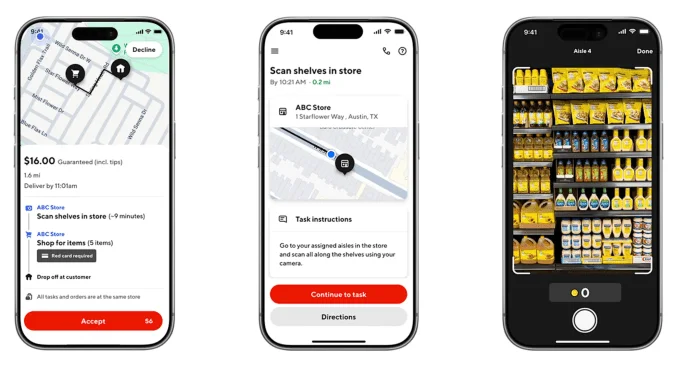
DoorDash is making a calculated bet that its vast network of delivery workers represents something more valuable than just a logistics fleet: a distributed workforce capable of generating the real-world data that AI systems desperately need. The company's new Tasks initiative, announced Thursday, transforms delivery couriers into data collectors who can earn money by filming everyday activities, recording speech samples, or documenting physical environments—all to train artificial intelligence and robotic systems.
The move signals a significant strategic shift for the delivery giant. Rather than viewing its 8 million Dashers solely as food transporters, DoorDash is positioning them as on-demand field agents who can capture the messy, unstructured reality of the physical world that AI models struggle to understand from synthetic or limited datasets.
The Data Collection Mechanics
DoorDash is rolling out two parallel systems. A standalone Tasks app will offer data collection assignments like filming hands washing dishes while wearing a body camera, with each clean dish held in frame for several seconds. Workers might also record themselves speaking in different languages or performing other routine activities. According to Bloomberg, this footage will train both DoorDash's proprietary AI models and those developed by partners across retail, insurance, hospitality, and technology sectors.
Simultaneously, the existing Dasher app will display location-specific digital tasks. These include photographing restaurant menu items to help establishments showcase their offerings, capturing hotel entrances to improve delivery navigation, or—continuing an existing partnership—closing the doors of Waymo's self-driving vehicles after deliveries. Pay is disclosed upfront and varies based on task complexity and effort required.
Why the Physical World Remains AI's Biggest Challenge
The initiative addresses a fundamental bottleneck in AI development: the scarcity of diverse, real-world training data. While text-based AI models can scrape the internet for billions of examples, systems that need to navigate physical spaces, manipulate objects, or understand human movement in context face a much harder problem. Laboratory datasets are too clean and controlled. Stock footage lacks the variability of real environments. Synthetic data, while useful, can't fully replicate the chaos of actual human behavior.
DoorDash's courier network offers something competitors can't easily replicate: geographic distribution, demographic diversity, and natural access to thousands of businesses and locations. A Dasher filming dish-washing in a cramped apartment kitchen captures lighting conditions, hand movements, and spatial constraints that differ dramatically from a suburban home or commercial setting. That variability is precisely what makes AI systems robust enough for real-world deployment.
The Gig Economy's Next Evolution
This isn't an isolated experiment. Uber announced similar plans late last year, offering drivers opportunities to upload photos and complete data labeling tasks for AI training. The pattern suggests gig economy platforms are recognizing a structural opportunity: their workers already travel to diverse locations and interact with varied environments as part of their daily routines. Adding data collection tasks requires minimal additional infrastructure while creating a new revenue stream that doesn't depend on delivery volume or ride requests.
For workers, the appeal is flexibility during downtime. A courier waiting between delivery requests can complete a five-minute filming task rather than sitting idle. However, the economics matter significantly. If tasks pay poorly relative to the time and effort required, adoption will remain limited. DoorDash's emphasis on upfront pay transparency suggests the company understands this calculus, though actual compensation rates remain undisclosed.
Strategic Implications for DoorDash's Business Model
The Tasks initiative potentially diversifies DoorDash's revenue beyond its core delivery marketplace. Selling access to a distributed data collection workforce—or licensing the resulting datasets—could generate margins substantially higher than the thin profits typical of delivery operations. Companies developing warehouse robots, autonomous vehicles, or computer vision systems face significant costs assembling the training data they need. DoorDash is essentially monetizing its network effects twice: once for delivery services, again for data generation.
The retail and hospitality partnerships mentioned by Bloomberg hint at immediate applications. A hotel chain could task Dashers with photographing entrances, signage, and parking areas across hundreds of locations to train systems that guide autonomous delivery robots. Insurance companies might use footage of various driving or walking conditions to refine risk assessment models. Restaurant chains could gather visual data on food presentation consistency across franchises.
Privacy and Labor Considerations
The program's geographic exclusions—California, New York City, Seattle, and Colorado—are telling. These jurisdictions have enacted stricter gig worker protections and data privacy regulations. California's AB5 law and similar measures in other excluded areas create legal complexity around worker classification and data rights that DoorDash appears to be navigating cautiously.
Workers filming in homes, businesses, or public spaces will inevitably capture bystanders, proprietary information, or sensitive environments. DoorDash hasn't detailed how it will handle consent, data retention, or usage restrictions. The company states that footage helps AI "understand the physical world," but the specifics of data anonymization, third-party access, and worker rights to their own image and voice remain unclear.
What This Means for the AI Industry
If DoorDash's model proves economically viable, expect rapid imitation. Every platform with a distributed workforce—from Instacart shoppers to TaskRabbit contractors—could pivot toward data collection services. This would fundamentally alter the AI training data market, shifting power from specialized data labeling companies toward gig platforms with existing worker networks and geographic reach.
The quality question looms large. Professional data collection ensures controlled conditions, consistent methodology, and verified accuracy. Crowdsourced data from workers juggling multiple priorities may introduce noise, inconsistency, or gaming behavior if workers rush through tasks for quick payment. DoorDash will need robust quality control mechanisms—likely involving AI systems checking the data used to train other AI systems, creating a recursive validation challenge.
For now, DoorDash is testing whether its logistics network can become a data infrastructure play. The company has built the distribution channels to reach millions of locations daily. Whether that translates into high-quality AI training data at scale will determine if Tasks becomes a meaningful business line or remains a experimental side project. Either way, it represents a notable evolution in how gig platforms think about the assets they've assembled—and what their workers can be paid to produce beyond deliveries.